
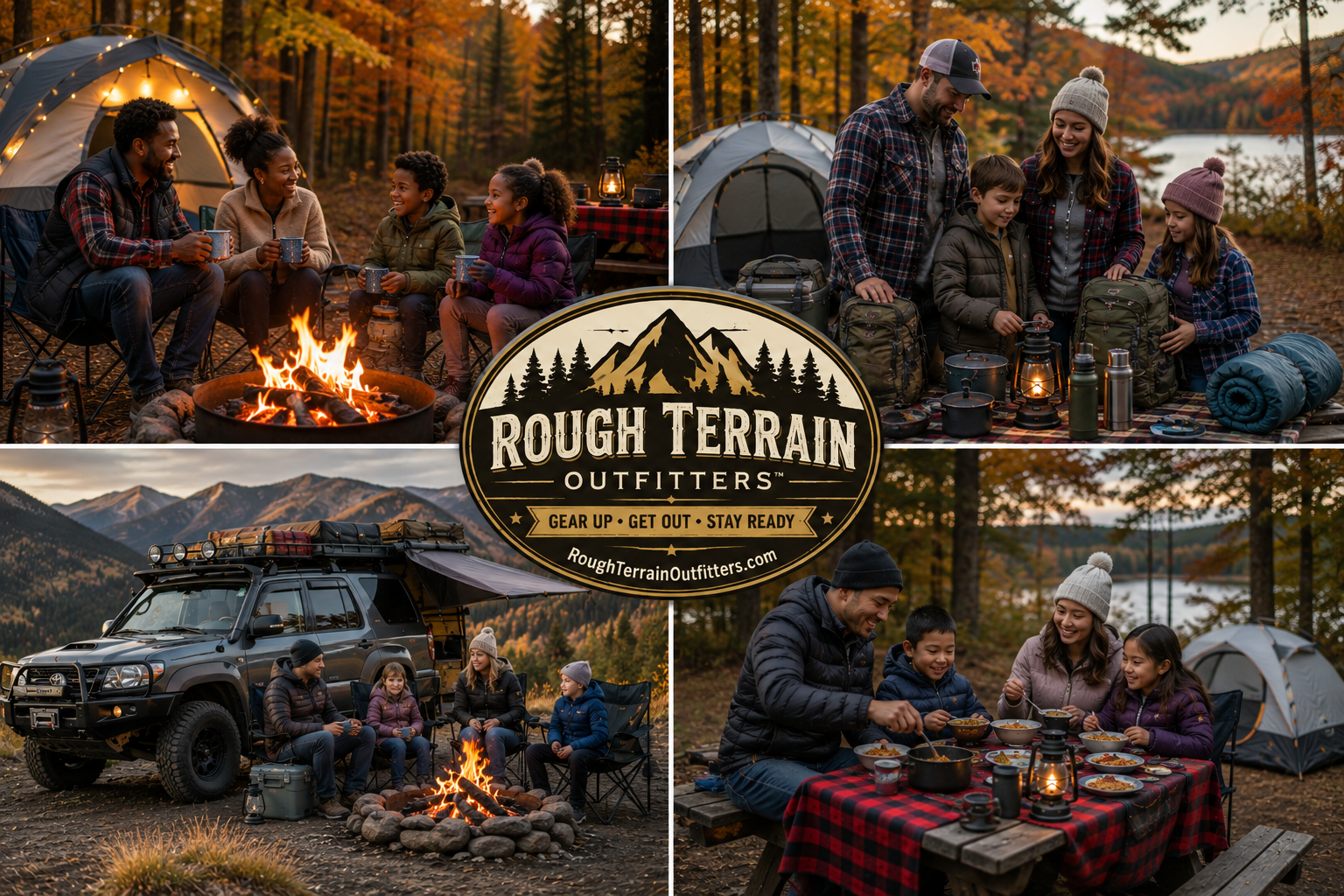
There’s something special about camping in the fall. Crisp mornings, colorful forests, cool evenings around the campfire, fewer insects, and the unmistakable smell of autumn make September and October some of the most rewarding months to take the family outdoors.
But fall camping also changes the gear equation.
The tent that felt perfect in July may struggle against a cold October rain. A lightweight summer sleeping bag can suddenly feel inadequate at 2 a.m., and shorter days mean campsite lighting becomes much more important. Fall camping requires thinking less about simply bringing camping gear and more about choosing equipment that can handle changing temperatures, wind, moisture, and longer nights.
A good family camping setup doesn’t need to be complicated or expensive. It needs to be reliable, comfortable, weather-appropriate, and suited to the way your family actually camps.
Here’s what to look for before buying gear for your next fall adventure.
- Start with a Dependable Three-Season Tent
Your tent is your family’s home away from home, and fall is when weather protection becomes especially important.
For most family campground trips, look for a three-season tent with a full or substantial rainfly, strong poles, good ventilation, and enough interior space for everyone.
For family car camping, consider buying a tent rated for one or two more occupants than will actually sleep inside. The extra room provides space for clothing, backpacks, and children who somehow manage to occupy twice as much sleeping space as expected.
Look for:
- Waterproof or weather-resistant construction
- Full rainfly
- Durable floor
- Strong tent stakes
- Interior storage pockets
- Vestibules for wet footwear
- Easy setup
- Adequate ventilation
Buyer Tip: Don’t judge a family tent by capacity alone. Compare floor dimensions and peak height. A little extra standing room can make rainy evenings with children considerably more comfortable.
- Upgrade the Family Sleeping System
If there’s one area where spending a little more can dramatically improve a fall camping trip, it’s sleep.
A sleeping bag’s temperature rating should be appropriate for the nighttime conditions you expect, while the sleeping pad underneath you provides both cushioning and insulation from the cold ground.
For fall family camping, consider:
- Three-season sleeping bags
- Insulated sleeping pads
- Self-inflating mattresses
- Camping cots
- Sleeping bag liners
- Camping pillows
- Extra fleece or insulated blankets
Don’t forget the kids. Children’s sleeping bags should be appropriately sized so they aren’t trying to warm an enormous amount of empty space.
Buyer Tip: Don’t spend your entire sleep-system budget on the sleeping bag and then purchase the cheapest mattress available. Ground insulation matters.
- Think in Layers, Not Giant Jackets
Fall temperatures can change dramatically during a single day.
A chilly morning might become a warm afternoon before temperatures tumble again after sunset.
Instead of relying on one heavy jacket, build a layering system for every member of the family:
Base layer: Helps manage moisture.
Midlayer: Fleece or another insulating layer provides warmth.
Outer layer: A wind- and rain-resistant shell provides weather protection.
Add warm socks, hats, gloves, and weather-resistant footwear as conditions demand. Fall camping guidance also emphasizes insulating layers and rain protection as temperatures become colder and weather less predictable.
For children, always pack additional dry clothing. Because, if there’s a mud puddle within 500 yards of your campsite, somebody will find it.
- Buy Lighting for the Entire Campsite
Fall means shorter days.
That makes lighting much more important than during midsummer camping.
A good family lighting system combines personal lighting and area lighting.
Every camper should have access to a flashlight or, preferably, a headlamp. Headlamps keep both hands free for cooking, tent setup, bathroom trips, and camp chores. A lantern provides broader illumination around the campsite.
Consider:
- Rechargeable headlamps
- LED lanterns
- Tent lights
- Backup flashlights
- Spare batteries
- Portable power banks
Headlamps offering a red-light mode are particularly useful because red light can help preserve night vision.
- Build a Fall-Friendly Camp Kitchen
Cool autumn weather practically begs for hot meals.
Pancakes in the morning. Chili simmering in the evening. Hot chocolate after a hike. Coffee beside a misty lake.
A reliable camp kitchen should include a stable camping stove, fuel, cookware, utensils, food-storage containers, water containers, and a quality cooler.
Useful upgrades include:
- Two-burner camp stove
- Cast-iron skillet
- Dutch oven
- Portable camp kitchen
- Folding prep table
- Insulated mugs
- Coffee maker or percolator
- Hard-sided cooler
- Portable refrigerator for extended trips
A two-burner stove can be particularly convenient for family camping because it allows you to cook food while simultaneously heating water or preparing another dish.
- Don’t Underestimate Rain Protection
Fall weather has a habit of changing quickly.
Waterproof storage can mean the difference between a minor rainstorm and an entire family sleeping in wet clothes.
Consider adding:
- Dry bags
- Waterproof storage bins
- Backpack rain covers
- Tent footprint
- Tarps
- Waterproof jackets
- Quick-drying towels
Dry bags, stuff sacks, and storage bins are also useful for organizing equipment around camp.
Buyer Tip: Create one waterproof container specifically for emergency dry clothing. Nobody touches it unless it’s needed.
- Make the Campsite Comfortable
Family camping doesn’t need to be an endurance test.
A few carefully chosen accessories can transform a basic campsite into an outdoor family room.
Consider:
- Comfortable folding chairs
- Folding table
- Outdoor campsite rug
- Hammock
- Canopy or tarp
- Camp pillows
- Warm outdoor blankets
- Elevated storage organizers
A ground mat outside the tent can also reduce the amount of dirt, leaves, and mud tracked into your sleeping area.
The goal isn’t to recreate your living room in the forest. It’s to make everyone comfortable enough that they want to go camping again.
- Add Portable Power Carefully
Modern family camping often involves phones, GPS units, cameras, rechargeable lanterns, watches, and other electronics.
For a weekend campground trip, several quality power banks may be enough.
For longer trips or vehicle camping, consider a portable power station. Solar panels can extend your available power when conditions and equipment permit.
Before buying, determine what you’re actually powering.
Charging four phones requires far less capacity than operating a portable refrigerator, laptop, lights, and multiple electronics.
Buyer Tip: Buy power capacity based on your equipment—not the biggest number printed on the box.
- Don’t Forget Safety Equipment
The most exciting equipment in the camping aisle isn’t necessarily the most important.
Every family’s gear collection should include dependable safety and emergency equipment.
Start with:
- First aid kit
- Emergency whistle
- Multi-tool
- Fire starter
- Backup lighting
- Navigation tools
- Water filtration or purification capability
- Emergency blankets
- Gear repair supplies
Core camping recommendations consistently include first aid, illumination, repair tools, shelter, sleeping equipment, and cooking essentials among the foundational pieces of a camping kit.
- Camping with the Family Dog?
Don’t make your four-legged adventurer sleep on the cold ground either.
Fall pet-camping equipment worth considering includes:
- Elevated dog cot
- Insulated dog bed
- Waterproof pet blanket
- Reflective harness
- LED collar
- Durable leash
- Collapsible bowls
- Portable water bottle
- Dog jacket when appropriate
- Pet first aid kit
- Waterproof seat protector
A comfortable dog usually makes for a quieter campsite—and a happier family.
- Buy Gear You’ll Actually Use
It’s easy to become overwhelmed by camping gadgets.
Before purchasing something, ask three questions:
Does this solve a real problem?
Will we use it regularly?
Is it durable enough to survive multiple seasons?
Spend your money first on the equipment that affects shelter, warmth, hydration, food preparation, lighting, and safety.
Then add comfort and convenience items.
A dependable tent you’ll use for five years is generally a better investment than five clever gadgets that never leave the garage.
- Build Your Family Camping Kit Over Time
You don’t need to purchase everything at once.
Start with the essentials:
Shelter → Sleep → Cooking → Water → Lighting → Safety
Then improve your setup after every trip.
Maybe your first outing teaches you that everyone needs a better sleeping pad. The next reveals that your cooler is too small. Another convinces you that a portable power station would simplify longer weekends.
That’s how a genuinely useful family camping setup develops—not from buying everything available, but from discovering what makes your family’s adventures better.
Fall Is Calling
Fall camping offers something summer simply can’t duplicate.
It’s waking to cool mountain air while everyone else is still buried inside their sleeping bags. It’s hiking beneath brilliant autumn leaves, cooking dinner while the temperature begins to drop, wrapping yourself in a blanket beside the fire, and watching children discover that outdoor adventures don’t end when summer does.
The right equipment doesn’t create those memories. It simply removes many of the obstacles standing between your family and experiencing them.
Before your next autumn getaway, inspect the gear you already own, replace worn equipment, and identify the upgrades that will genuinely improve your family’s campsite.
Then explore Rough Terrain Outfitters for camping, hiking, outdoor cooking, portable power, lighting, hydration, pet camping, and adventure equipment designed to help your family. Because when the leaves start changing, camping season isn’t ending.
It’s getting interesting.
Gear Up • Get Out • Stay Ready!





0 Comments